

Let’s Talk Toilets (Yes, Really)
When designing a tiny home, every room has to work hard. Kitchens multitask, living rooms become offices, and bedrooms somehow fit actual humans. But today, I want to talk about the unsung hero of tiny living: the toilet.
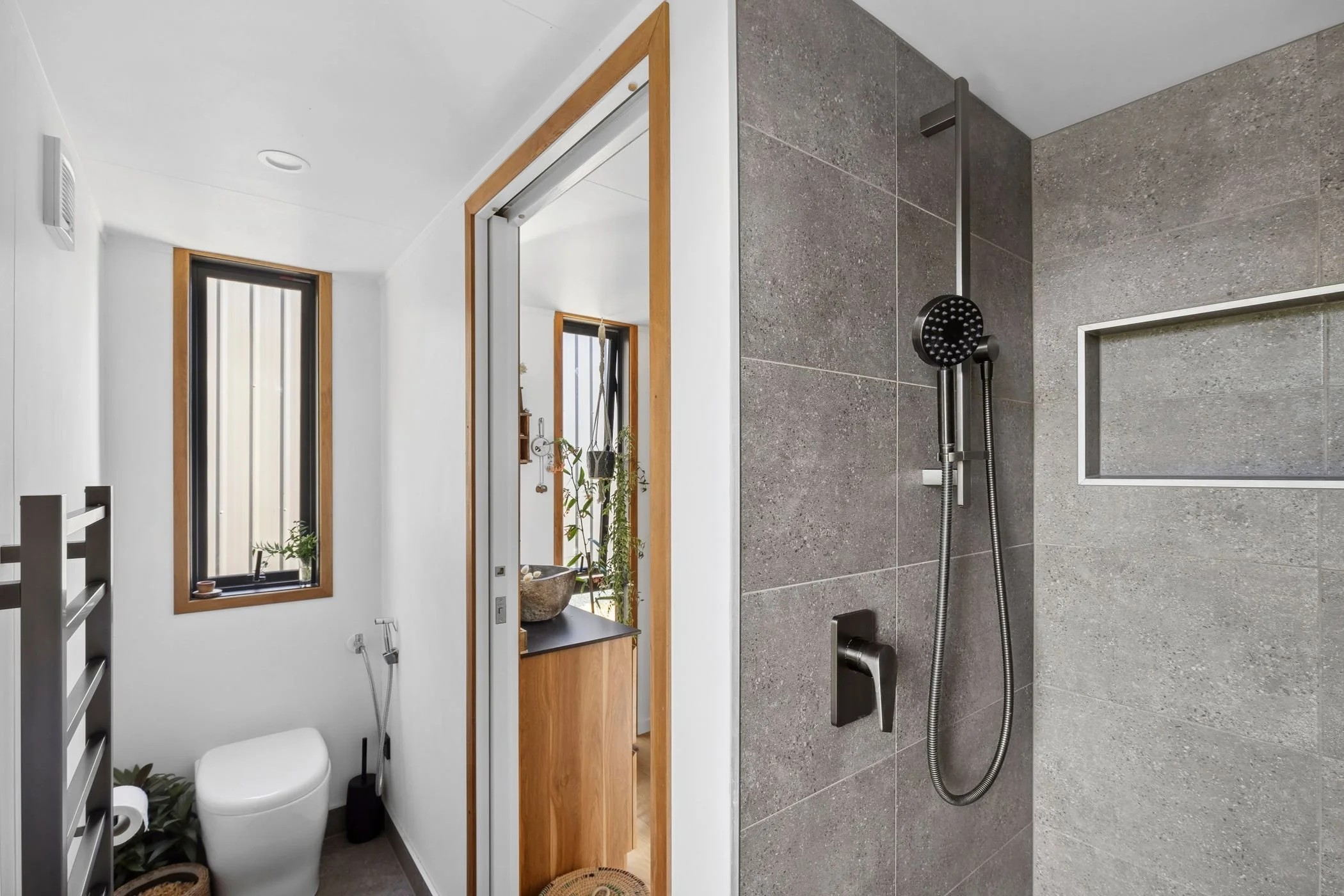
Yes, that toilet. Because if you’re going to live small, you should at least be well informed about where your business goes. Toilets are one of the biggest decision points in any tiny home build—and there is no one-size-fits-all solution. Your site, your lifestyle, your environmental values, and your tolerance for “hands-on” involvement all come into play.
So let’s flush out (sorry, had to) the main toilet options for tiny homes—facts, pros, cons, and a few reality checks included.
Composting Toilets: Nature Doing Its Thing
Composting toilets are one of the most popular choices in tiny homes, particularly for off-grid living. They don’t require water, sewer connections, or septic systems, which already makes councils, budgets, and the environment breathe a collective sigh of relief.
Instead of flushing waste away with litres of drinking-quality water (a standard flush toilet uses around 6–9 litres per flush), composting toilets rely on aeration, separation, and time. Solid waste breaks down into compost over several months—typically 6 to 12 months—and can eventually be used around trees or ornamental gardens (check local regulations, always).
Key facts:
No water required
No sewer or septic hookup
Minimal odour when used correctly (dry matter is king)
Requires regular but simple maintenance
Maintenance varies by system. Some use bag-based systems that need emptying weekly or fortnightly, while others use larger chambers or long-drop-style setups that may only need attention quarterly. Despite the stigma, modern composting toilets are surprisingly low smell, efficient, and tidy—provided users follow instructions and don’t treat them like a suburban porcelain throne.
They’re also compact. We’ve installed composting toilets in bathrooms, ensuites, and even clever cupboard setups. Tiny homes love them.
Incinerating Toilets: Burn After Use (Literally)
If composting sounds a bit too earthy for you, incinerating toilets might be your soulmate.
These toilets use electricity or gas to incinerate waste at extremely high temperatures, reducing everything to a small amount of sterile ash. No water, no sewer, no compost pile—just a discreet ash tray to empty every few weeks.
Key facts:
No water required
No sewer or septic system
Virtually no waste handling
Zero odour when operating correctly
They’re ideal for people who want minimal interaction with waste but still want to live off-grid. The trade-off? They do require power, and they’re generally more expensive upfront. But for some clients, convenience and cleanliness outweigh everything else.
Flush Toilets: Familiar, Comfortable, and Still an Option
Yes—tiny homes can have flush toilets.
Flush toilets are the most familiar option and come with the smallest learning curve for guests, kids, or anyone who just wants things to feel… normal. They do, however, require water and some form of wastewater management.
In urban or semi-urban settings, this might mean:
Connection to public sewerage
An above-ground holding tank
A pump-out system
We often work with solutions like above-ground tanks from providers such as Allflow, which in many cases do not require council consent, depending on location and setup.
Key facts:
Uses water (typically 6–9L per flush unless low-flow)
Requires sewer, septic, or holding tank
Familiar and user-friendly
More infrastructure required
Flush toilets can absolutely work in tiny homes—it just comes down to site feasibility and compliance.
Chemical Toilets: The Blue-Bottle Middle Ground
Ah yes, the chemical toilet. Many of us have met one while camping and never forgotten the experience (for better or worse).
Chemical toilets sit somewhere between composting and flushing. They use a small amount of water for flushing and chemicals to control odour and break down waste. Waste must be emptied at a designated dump station, which can be convenient—or very inconvenient—depending on where you live.
Key facts:
Partial flush system
Uses chemicals
Requires regular trips to dump stations
Familiar feel but higher ongoing maintenance
Some people love them for their simplicity and “out of sight, out of mind” waste chamber. Others strongly dislike the chemicals and logistics. This option really comes down to personal tolerance and access to facilities.
So… Which Toilet Is Right for You?
Choosing a toilet for your tiny home isn’t about what’s “best”—it’s about what’s best for you.
Ask yourself:
What services does my site have? (Water, sewer, power, space)
How involved do I want to be? (Hands-on vs hands-off)
What are my environmental priorities?
How close are my neighbours? (Important, trust me)
A rural orchard might love compost. An urban backyard might prefer flush. An off-grid minimalist might swear by incineration. There’s no wrong answer—just informed ones.
And if there’s one thing I can promise you: in tiny living, choosing the right toilet will impact your daily happiness far more than your bench-top colour ever will.
Happy toilet choosing 🚽
— Fran