

Raising Tiny Adventurers: Why Family Life Thrives in a Tiny Home
One of the most common questions we hear is:
“But… can you really raise kids in a tiny home?”
The short answer? Yes.
The longer answer? Not only can you — many families thrive because of it.
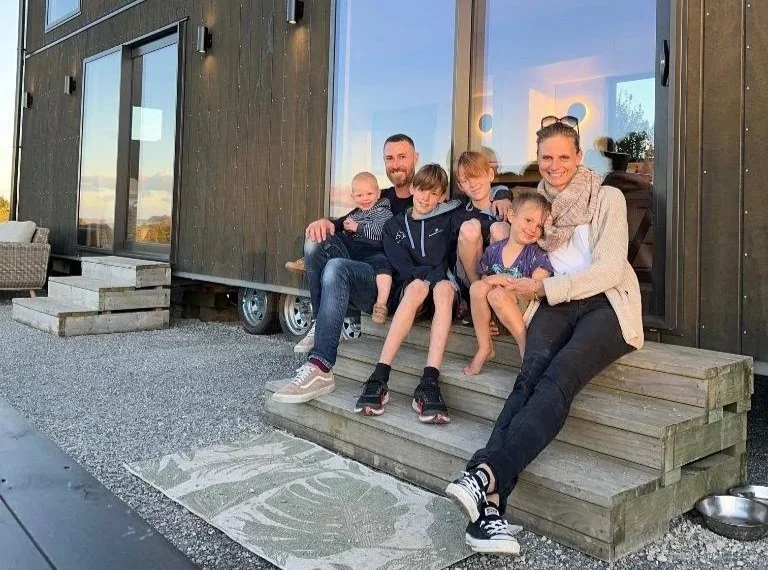
Fran & Daniel Huelsmeyer, owners of Ruru, with their four sons in front of their MOA Design Tiny Home.
At Ruru Tiny Homes, we’ve worked with families of all shapes and sizes, and the pattern is clear: when tiny homes are designed well and lived in intentionally, they can be incredibly supportive environments for raising children.
Here’s why.
Stronger Family Bonds (It Comes With the Floorplan)
In a tiny home, there’s no disappearing into separate wings of the house. And honestly? That’s not a bad thing.
Limited space naturally encourages:
more shared time
more conversation
more teamwork
Family life becomes more connected — not because anyone is forced together, but because the home supports togetherness. Meals, games, homework, and downtime tend to happen side by side, and those everyday moments are where strong bonds are built.
Space Where It Matters (Yes, Including Playrooms)
A well-designed tiny home doesn’t mean chaos.
Many family tiny homes include dedicated playrooms or mezzanine spaces, giving children a place to create, imagine, and make a mess — while keeping the main living area calm and functional.
Good design makes all the difference. Tiny doesn’t mean cramped; it means intentional.
Learning Simplicity (Without Feeling Like They’re Missing Out)
Tiny living naturally teaches children that more stuff doesn’t equal more happiness.
With limited space:
kids learn to value what they own
clutter doesn’t accumulate
organisation becomes second nature
Children raised in tiny homes often develop a strong appreciation for experiences, creativity, and relationships — because those are what fill their days, not endless possessions.
Outdoor Life Becomes the Default
When indoor space is compact, the outdoors becomes an extension of the home.
Tiny home kids tend to:
spend more time outside
explore nature
play freely and creatively
Whether it’s the backyard, the beach, bush walks, or bike rides, outdoor play becomes part of everyday life — supporting both physical health and emotional wellbeing.
Creativity Thrives in Small Spaces
Tiny homes invite imagination.
Children quickly learn how to:
adapt spaces for different uses
turn mezzanines into forts, bedrooms, or reading nooks
create play worlds out of very little
This kind of environment nurtures problem-solving, independence, and creativity — skills that matter far beyond childhood.
Sustainability Becomes Normal
Living small makes sustainability visible.
Children raised in tiny homes learn firsthand about:
conserving energy
being mindful of water use
reducing waste
These aren’t abstract lessons — they’re part of daily life. And when sustainability is normalised early, it tends to stick.
Financial Freedom = Family Freedom
Lower living costs can be life-changing for families.
Tiny home living often means:
lower housing costs
reduced utility bills
less financial pressure
That can translate into more time, more flexibility, and more opportunity — whether that’s travel, education, hobbies, or simply being more present as a family.
Independence and Life Skills, Built In
In a tiny home, everyone contributes.
Children naturally learn:
responsibility
tidying and organisation
basic cooking and household skills
These aren’t chores — they’re part of belonging to the household. And they help children grow into capable, confident humans.
Community Comes With the Territory
Tiny living often connects families with like-minded communities — people who value connection, simplicity, and shared values.
For kids, this can mean:
strong friendships
a sense of belonging
learning how to live respectfully alongside others
Community becomes part of the upbringing, not an afterthought.
Tiny Living, Big Childhoods
Raising children in a tiny home doesn’t mean shrinking their world.
If anything, it often expands it — emotionally, socially, and experientially.
Tiny homes bring families closer, strip away unnecessary noise, and make room for what truly matters.
— Fran Huelsmeyer
Owner, Ruru Tiny Homes
Want to Share Your Story?
Do you live in a tiny home with kids — or are you thinking about it?
We love sharing real client stories (anonymously or named — your choice). If you’d like to be featured in our blog, get in touch and we’ll send you a few questions. Together, we’re building a growing collection of honest tiny living experiences.